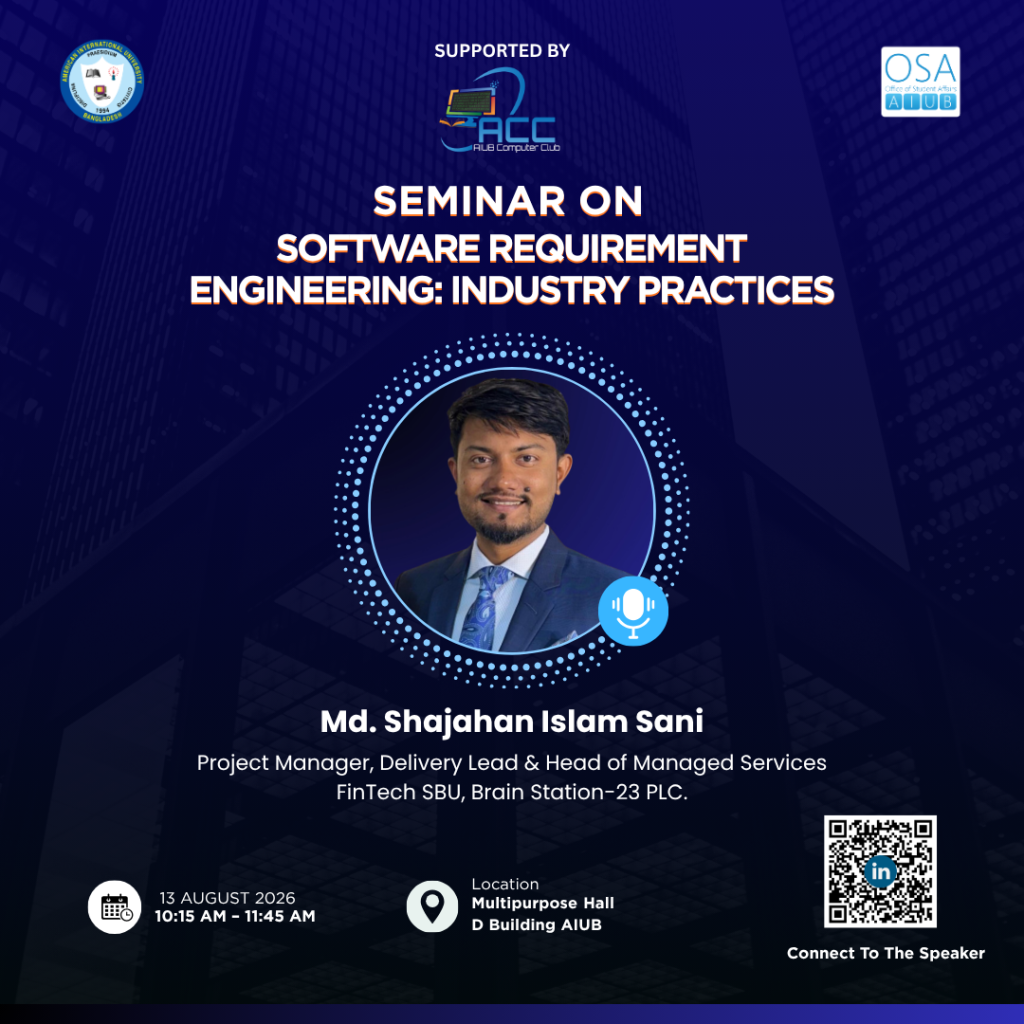
On Thursday, 13th August 2026, a seminar titled “Seminar on Software Requirement Engineering: Industry Practices” was held with the goal of bridging the gap between academic understanding and real world industry expectations in requirement engineering. The seminar took place at the Multipurpose Hall, D Building, AIUB, organized by Office of Students Affairs (OSA) and supported by AIUB Computer Club (ACC). The seminar was graced by the presence of Dr. Abhijit Bhowmik, Associate Professor and Special Assistant of the Office of Student Affairs (OSA), Department of Computer Science, AIUB. And the keynote speaker at the seminar was Md. Shahjahan Islam Sani, Project Manager, Delivery Lead & Head of Managed Services, FinTech SBU, Brain Station-23 PLC.
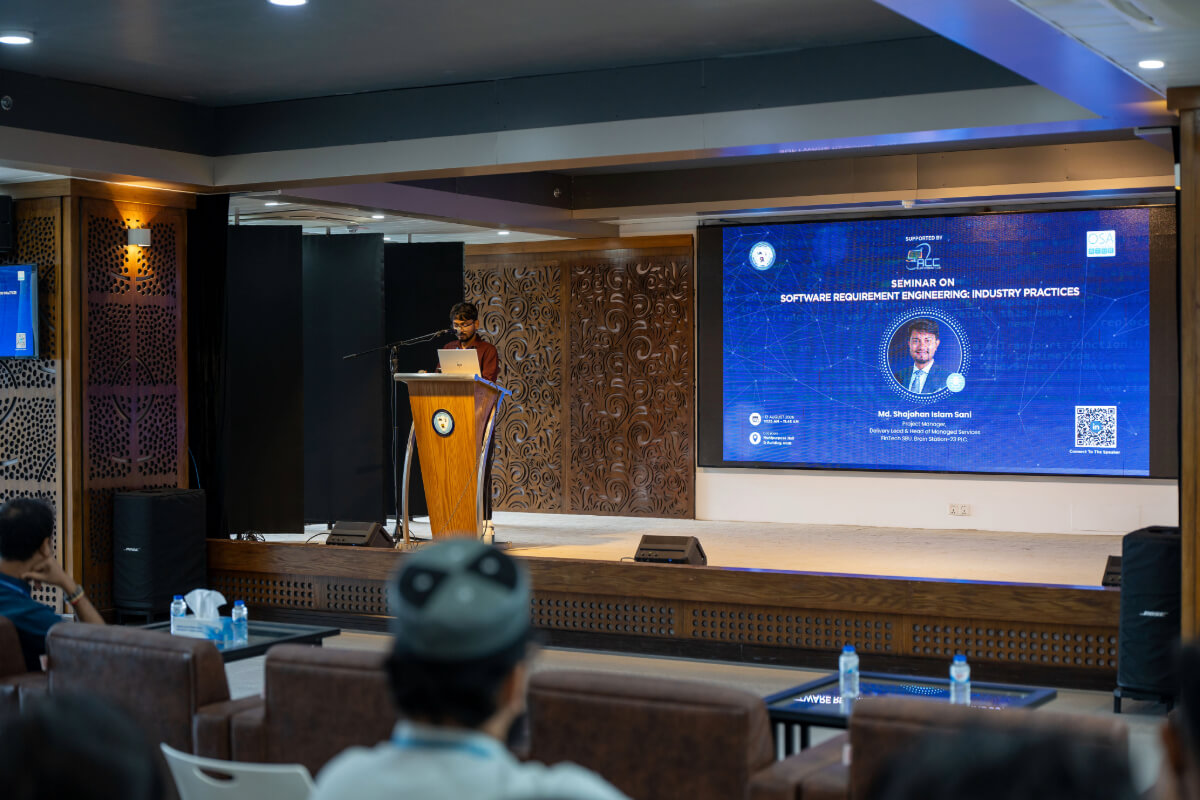
The session began with the host introducing the purpose of the seminar and welcoming the keynote speaker Md. Shahjahan Islam Sani to the stage. Firstly he introduced the term SRE (Software Requirement Engineering) then discussing a common industry scenario: the client calls saying “We Want Wallet Transfer,” and how problems arise without a proper SRS document. He famously quoted the most expensive sentence in software development: “That’s not what I want,” which often stems from poor requirement understanding at the early stages. He then explained 2 kinds of requirement: functional and non-functional requirement also introduced the concept of business mind requirements. He illustrated how a single requirement can have five different meanings.
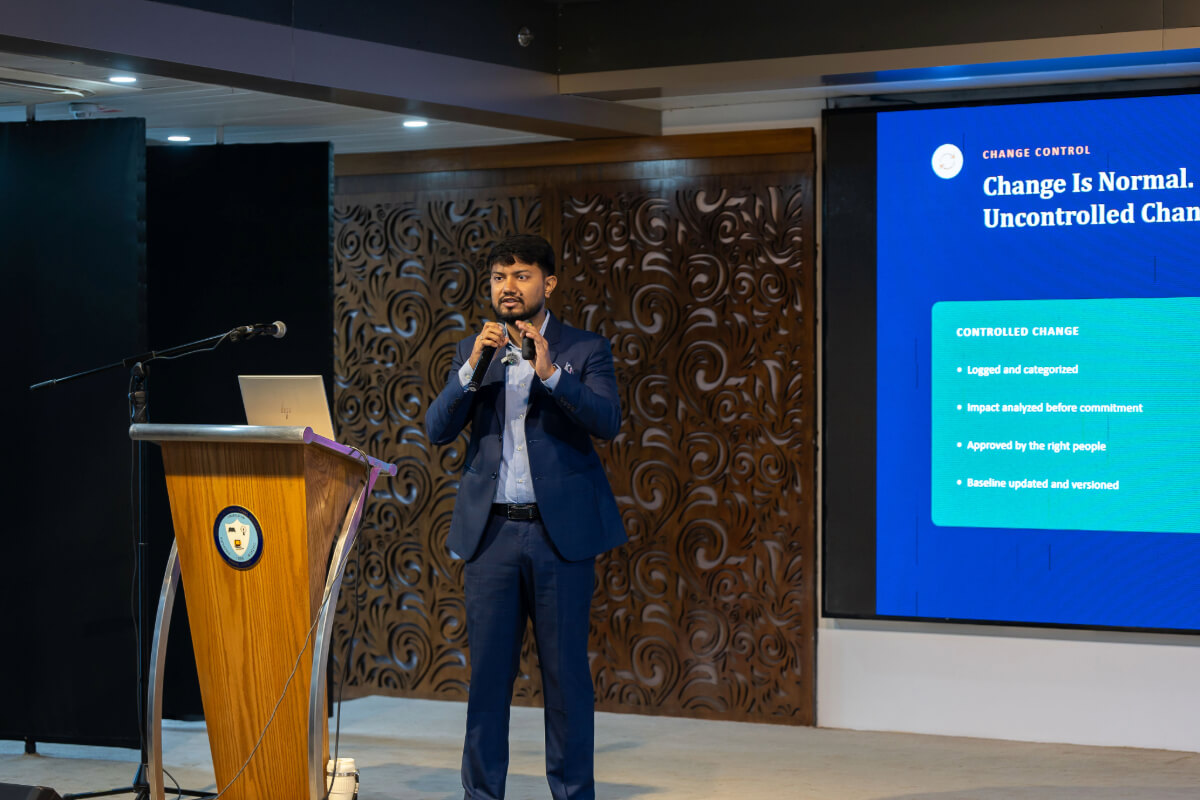
Secondly, the speaker introduced the “Requirement Development Lifecycle” and the key questions behind every good requirement. He demonstrated how to move from a vague ask to a complete requirement by asking a structured set of questions, clarifying that SRS is not just documentation it is an agreement between stakeholders. He also provided examples of bad vs good requirements. Then he helped students visualize the process using logical flowchart diagram. Next moving to Requirement Traceability, he discussed about documentation, prioritization, approval, baseline, versioning, traceability and change management. He highlighted that change is normal but uncontrolled change is dangerous, walking the attendees through the change control process. Furthermore discussed that project managers evaluate the effects on scope, time, cost, quality and testing before approving any change request.
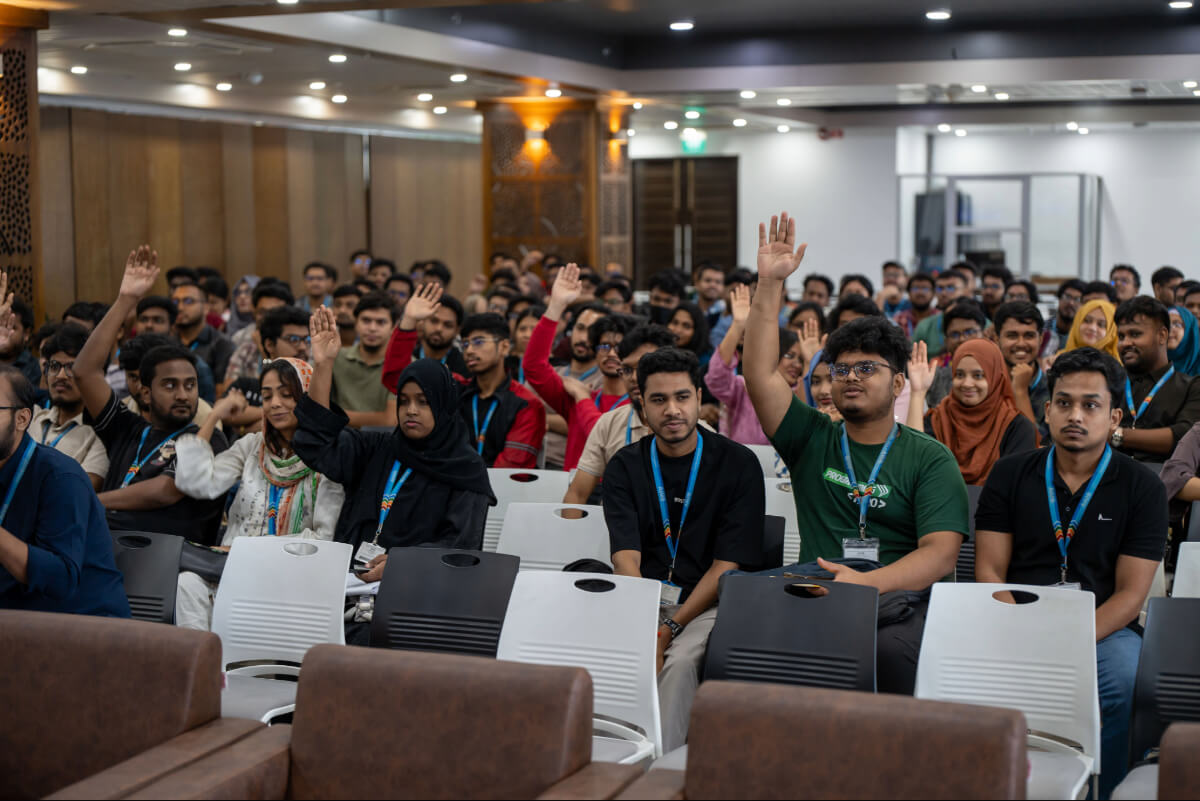
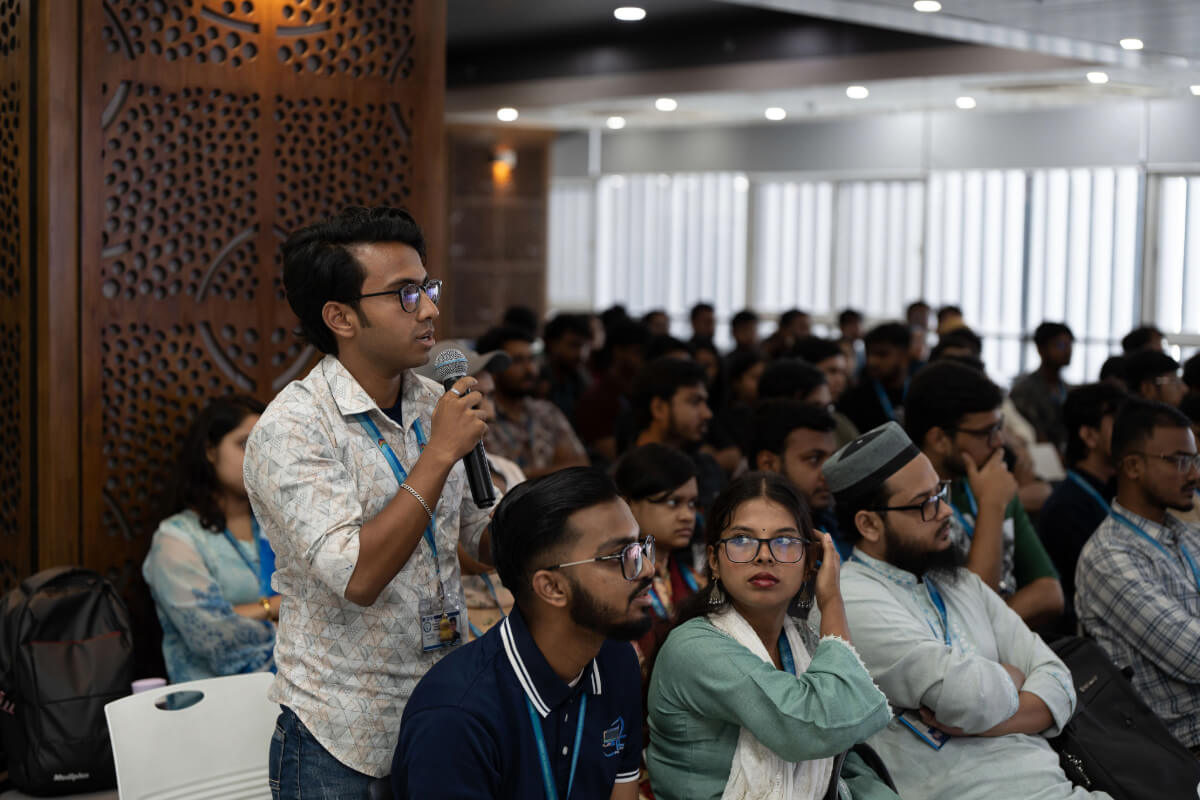
In Q&A session he presented a practical scenario where two features did not communicate, engaging participants to provide answers and demonstrating how to fix such problems. With great enthusiasm, the attendees gave answers and shared their ideas. He also asked the students to determine whether each of the three scenarios was a bulk or a new requirement in order to further engage them. The students eagerly raised their hands and answered his questions about bulk requirements, showing just how engaged they were.
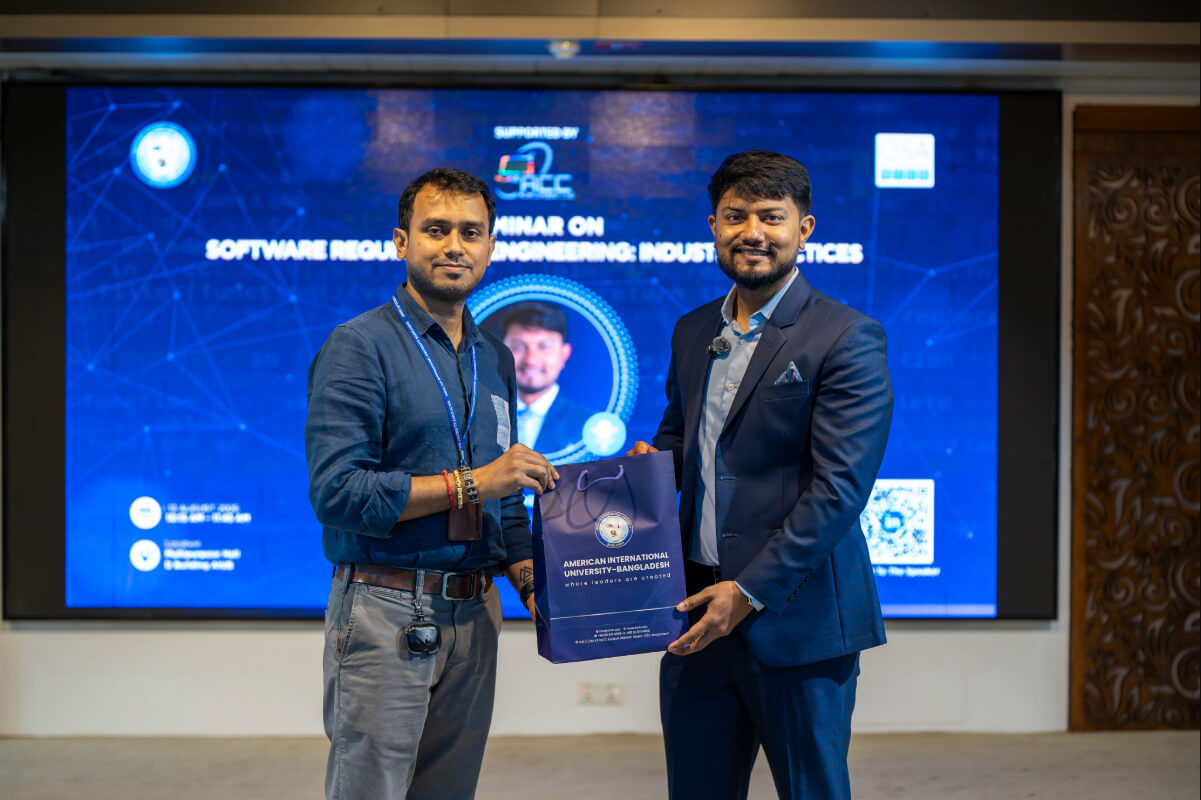
Finally, the session ended with Dr. Abhijit Bhowmik expressing gratitude to Md. Shahjahan Islam Sani for his valuable time and insightful session as well as to all the attendees for their active participation and enthusiasm. Later a token of appreciation was presented to the speaker as a gesture of gratitude. After that, a group picture was taken with the speaker and attendees.
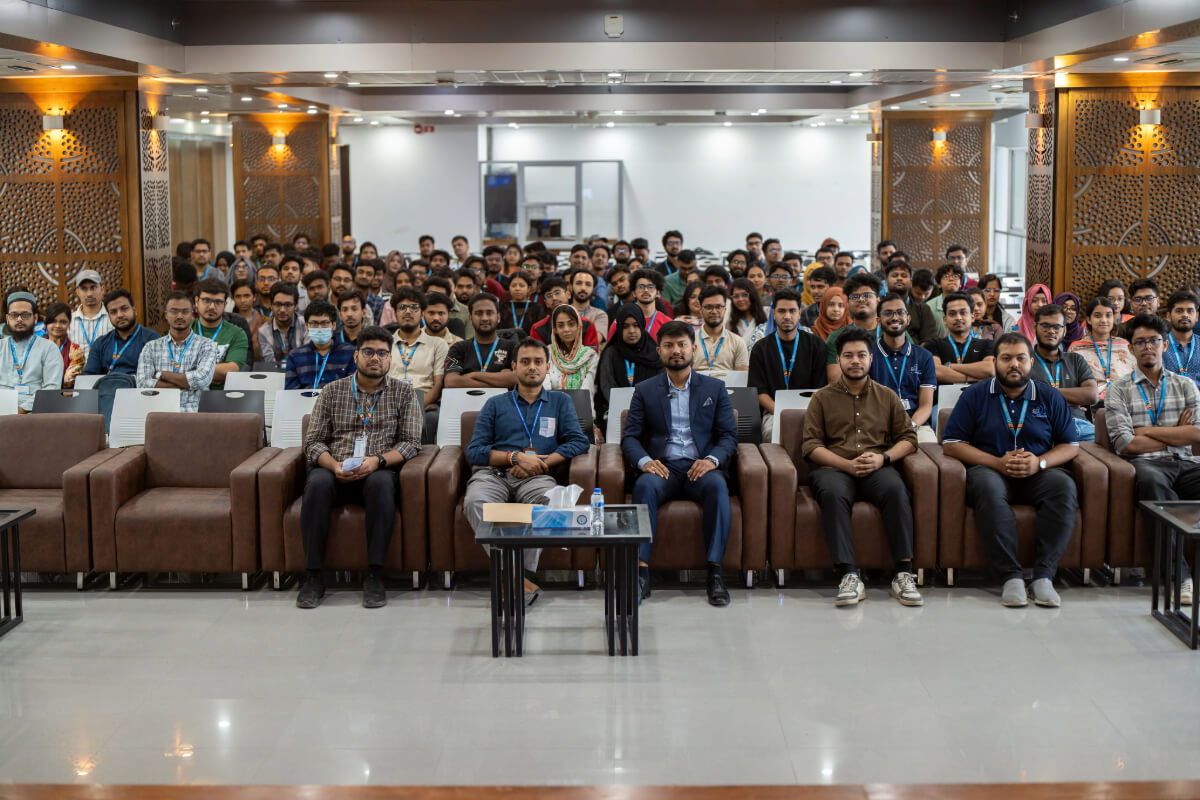
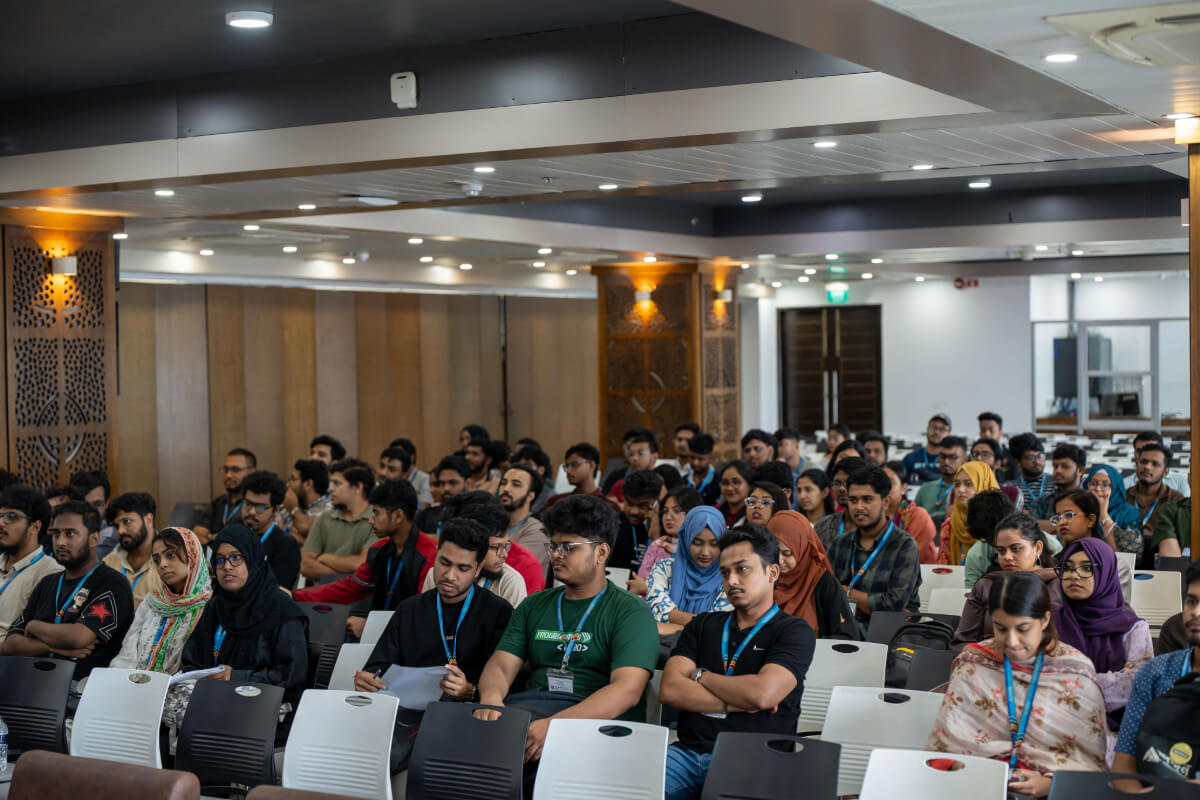
On the whole, this seminar was a remarkable experience for everyone present, focusing on the often overlooked yet critical aspect of software development requirement engineering. Students gained a deeper appreciation for the role that clear communication, proper documentation and structured processes play in the success of any software project, and the interactive format ensured that they remained engaged from start to finish. The speaker’s ability to break down complex concepts into relatable examples made the session both enjoyable and insightful. With more than 200 students in attendance and an atmosphere charged with energy, the seminar undoubtedly succeeded in its mission to prepare students for the real world challenges of the software industry.