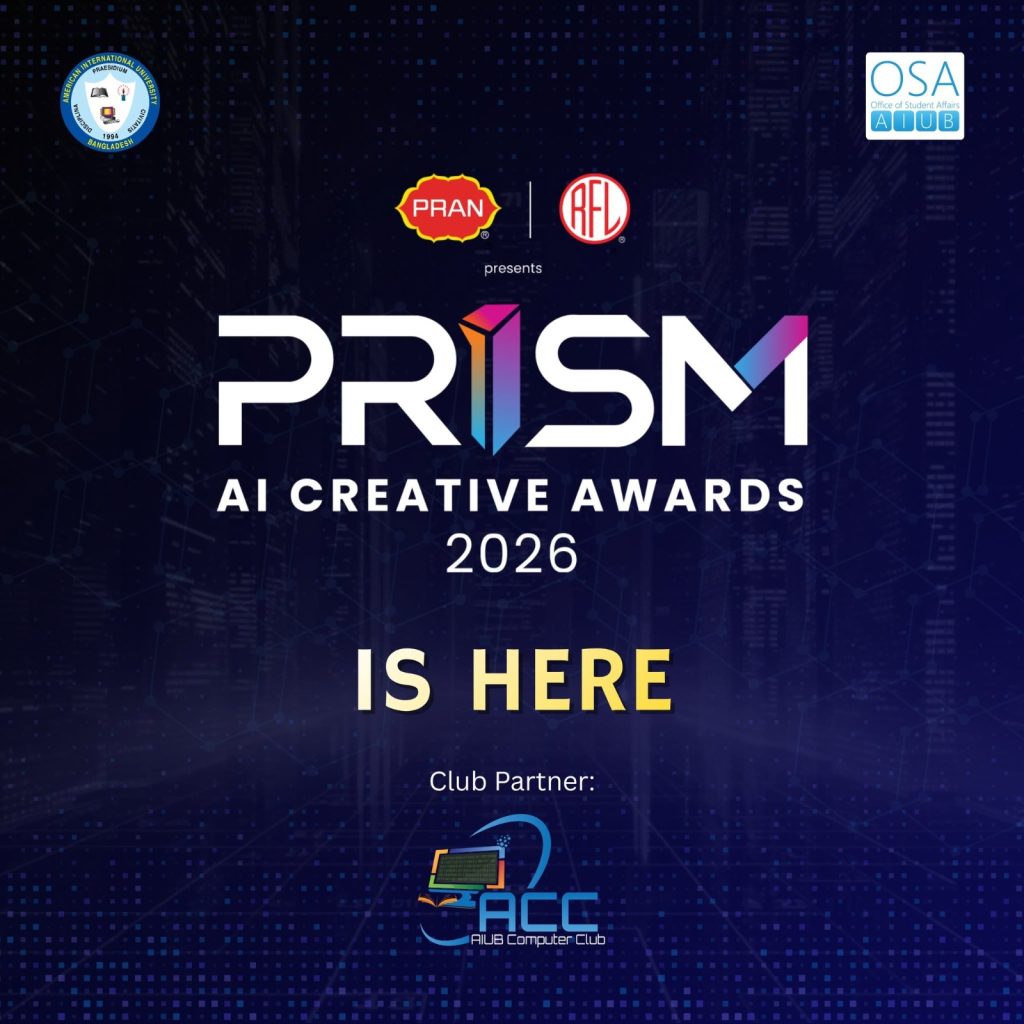
On Monday, 28 September 2026, AIUB Computer Club organized a seminar titled “PRAN-RFL Presents PRISM AI Creative Awards 2026 – Student Participation Guidelines” in collaboration with PRAN-RFL and supported by Office of Student Affairs (OSA) at Media Studio (Annex 2), American International University-Bangladesh (AIUB). The event focused on the PRISM AI Creative Awards, the growing use of Artificial Intelligence in the creative industry and the opportunities available for students through AI-based creative work.
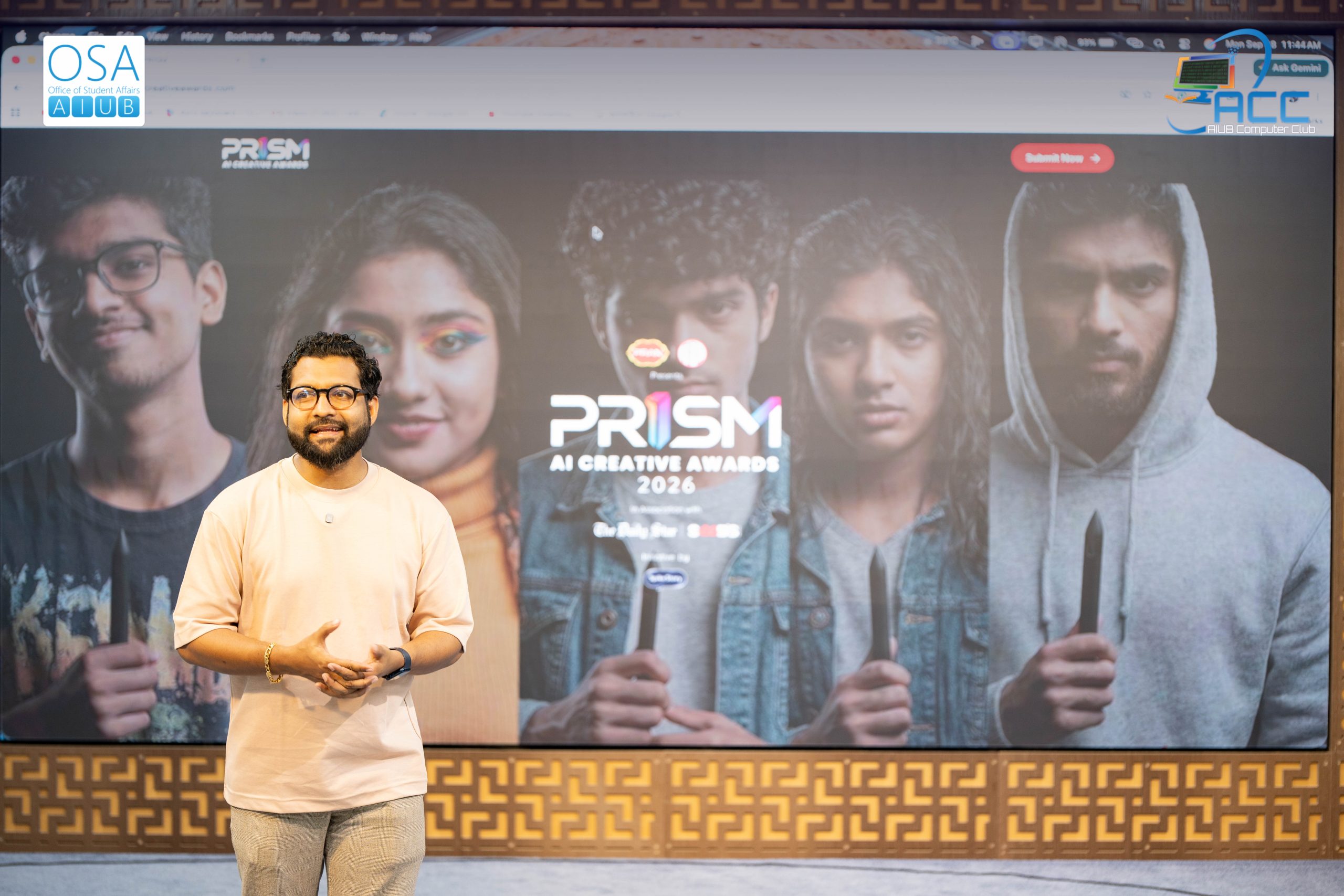
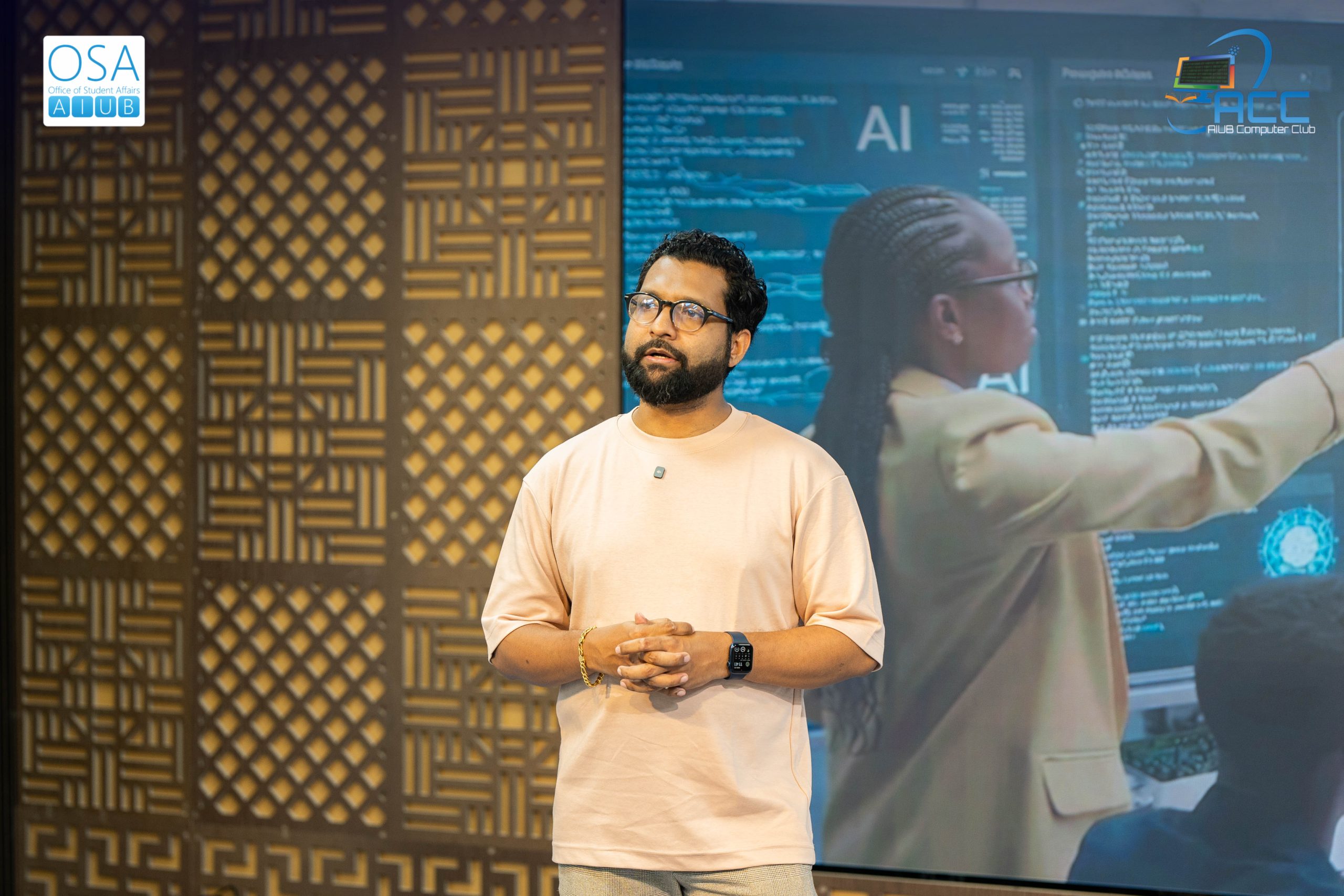
The event began with an introduction from the host, who discussed the objectives of the seminar and gave an overview of the PRISM AI Creative Awards before inviting Mr. Hossain Al Farabi, CEO of Team Creative, to the stage. He conducted the main session and discussed the role of AI in the creative industry and the opportunities that students can explore through AI-based creative work. During the session, Mr. Hossain Al Farabi introduced SpikeStory, a media platform focused on youth skill-building and development projects. He also discussed the growing impact of AI-driven creativity in advertising and explained how combining effective communication with AI tools is creating new opportunities in the creative field.
The speaker also explained the various categories of the PRISM AI Creative Awards. The competition has four main categories: Short Film, Fashion Content, Advertisement (Ad), and Music. Participants can send AI-generated video and creative content under these categories.
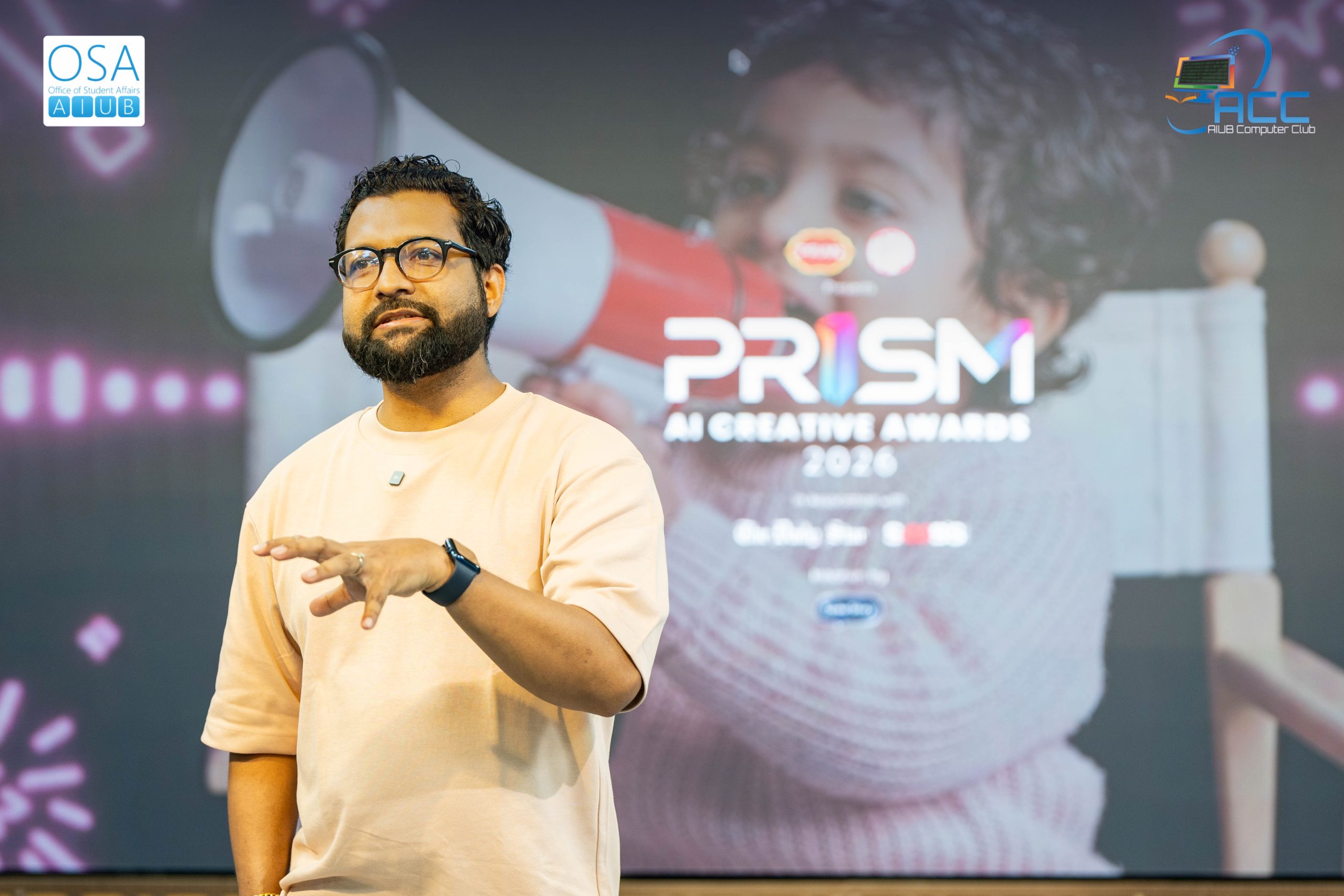
Another important part of the session was the selection process of the competition. More than 2,000 submissions were received from which the top 60 participants will be shortlisted for the second round. The shortlisted participants will take part in an intensive two day bootcamp, where they will receive guidance from industry mentors before the final awards.
The speaker also highlighted some of the opportunities available to the participants, including national media coverage, industry connections, and opportunities for learning and earning. The discussion gave students an idea of how AI skills can relate to creative work and real-world opportunities.
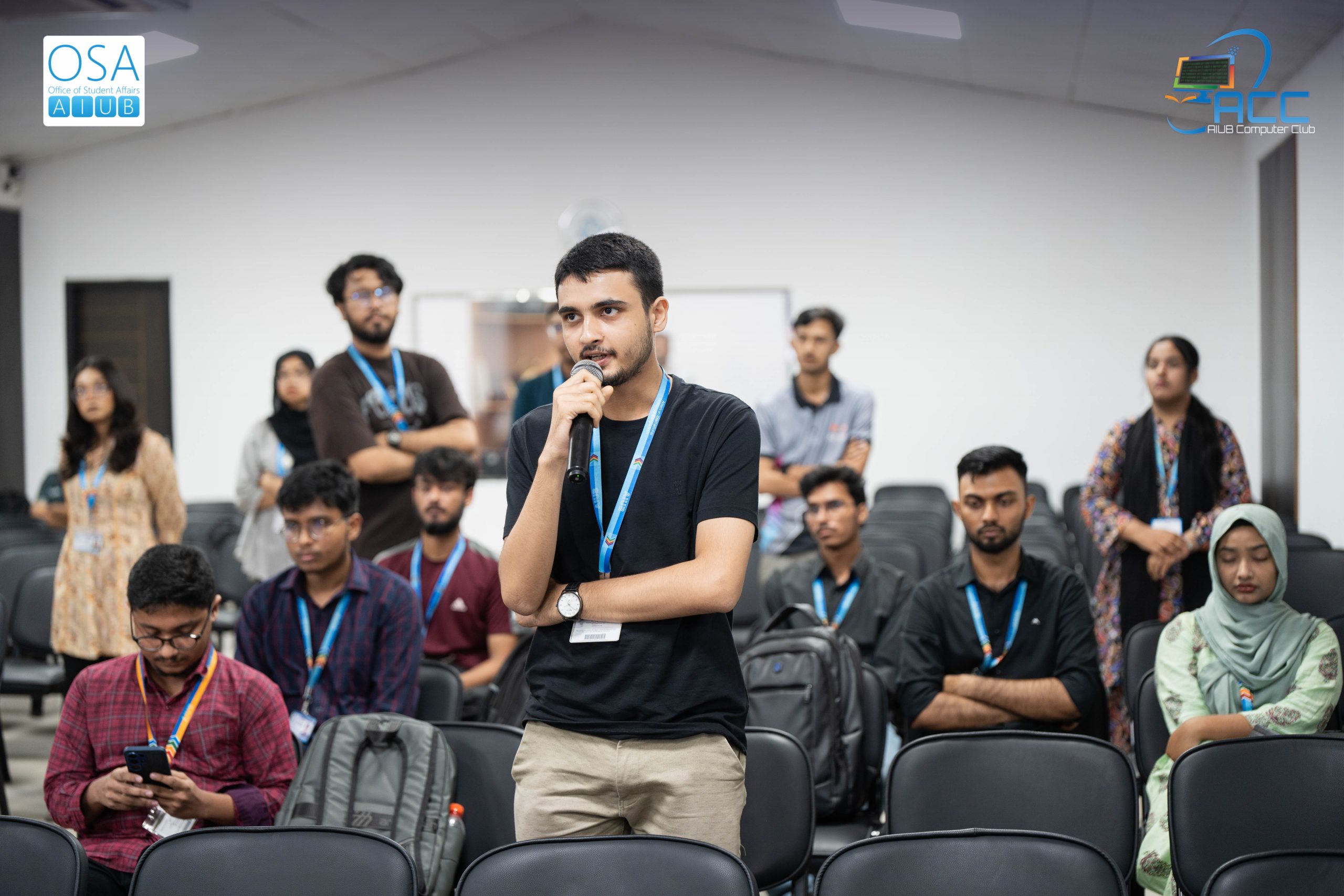
The seminar then moved into an interactive Q&A session, where students discussed the impact of AI on technology careers. One of the questions raised was whether choosing Computer Science and Engineering (CSE) could be considered a mistake in the age of AI and how students should evaluate their career paths. In response, the speaker explained that AI will not replace CSE jobs, but the hiring environment for fresh graduates and interns will become more challenging. He encouraged students to focus on developing their core skills and learning how to work alongside AI rather than simply fearing automation. Students also asked about how they should prepare for internship-level roles. The speaker emphasized that students need to learn modern AI tools while also having a strong understanding of their respective fields. During the discussion, attendees also shared their views that coding is only the final implementation stage and that fundamentals, system design, and software architecture remain important.
The discussion further highlighted the importance of interdisciplinary knowledge. Students discussed how combining CSE with other fields such as Robotics, Healthcare, or Pharmacy can create new opportunities as AI tools become more common in professional work. The speaker also encouraged students to develop a project-manager mindset by finding gaps in the local market and providing clear and structured inputs to AI systems to develop useful products and solutions.
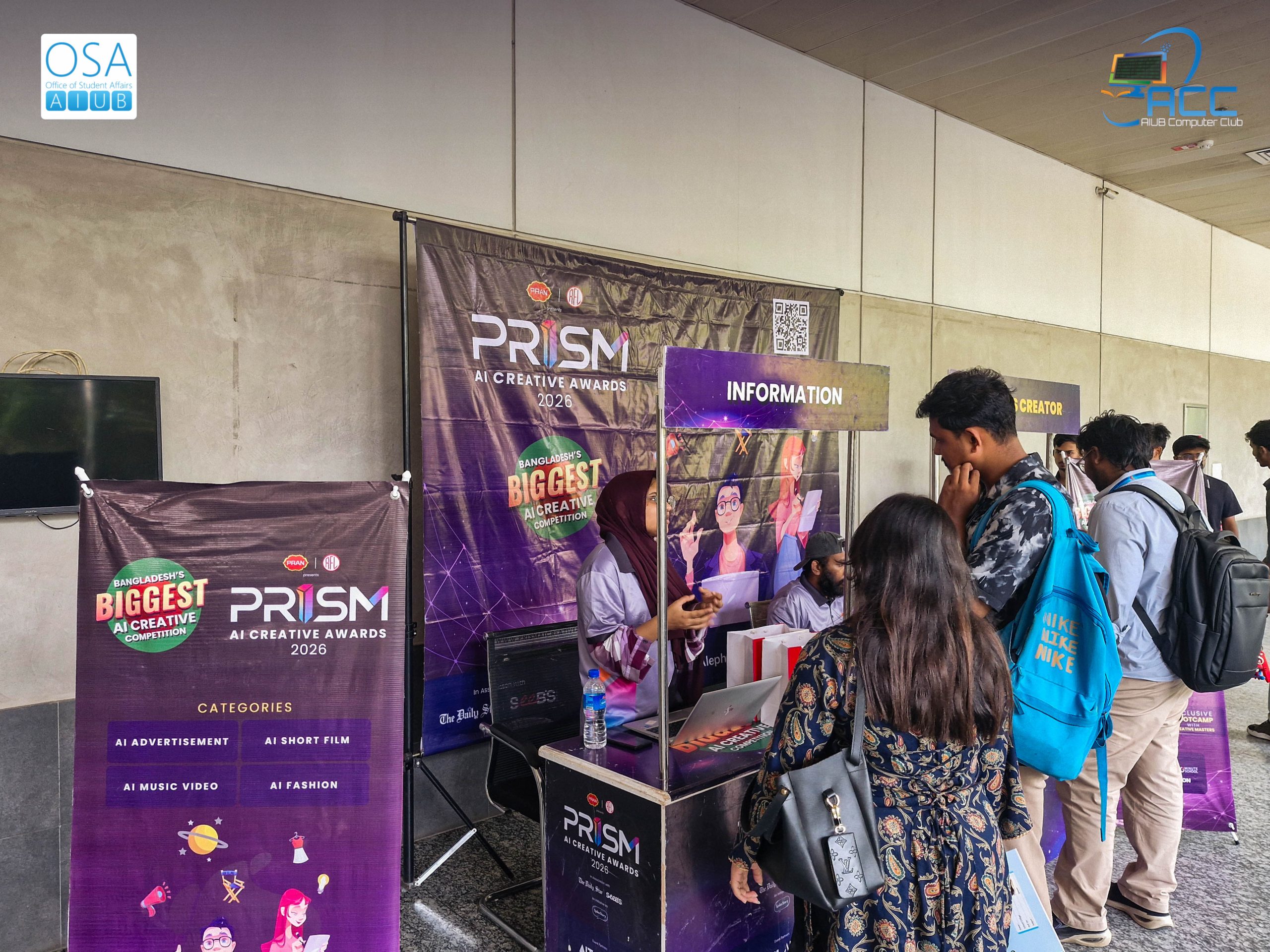
The session concluded with an interactive information booth opening at Building D for ongoing student activities. Overall, the seminar provided students with useful insights into AI-based creativity, the PRISM AI Creative Awards, and the skills needed to prepare for a changing job market.